
EV Parts Ecommerce: Fitment, Education, and Search Setup
A Model Y owner buys a lithium low-voltage battery from your store, installs it, and the warning light never clears. Your year/make/model selector said “2022 Tesla Model Y: fits.” One aftermarket seller of that type of part lists it for 2020 through March 2022 builds only, because later cars moved to a revised 15.5V system. So the dropdown was right for some 2022 cars and wrong for others. You just paid return freight on a part the customer now believes you mislabeled.
That gap between model year and actual build is where most EV parts categories break. The fix is not a bigger catalog. You need a catalog structure that tracks what changes inside a model year. On top of that sits owner education that answers “what does my car even need,” connected to search pages built around how EV owners phrase those questions.
Why does year/make/model fitment break on EV parts?
Standard YMM fitment assumes a part stays the same for an entire model year. EVs change mid-year, sometimes through a production change and sometimes through a hardware revision that never shows up in the model name.
The low-voltage battery is the clearest case. Tesla’s own Model Y service manual tells technicians to set the battery type in Service Mode and run a “Learn New Battery” routine after installing a new low-voltage battery. A shopper who buys the wrong chemistry, or never learns about that step, ends up with a dashboard alert and a return request.
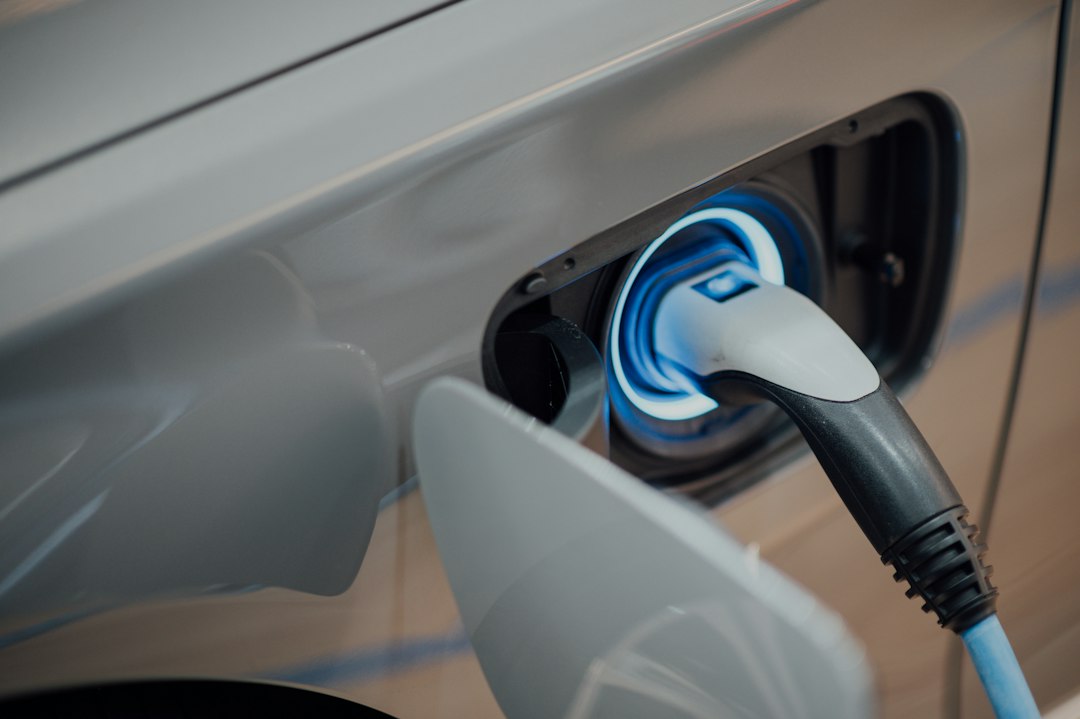
Charge ports create a second split. SAE published J3400, its version of the Tesla-developed connector, as a technical information report in December 2023, and most major automakers announced plans to move North American models to that port starting around the 2025 model year. Timing varies by nameplate. A 2024 and a 2026 version of the same SUV can need different charging adapters, and a fitment table built from gas-car habits will not catch it.
Most of the content ranking for EV parts fitment comes from app vendors selling YMM search widgets. Those tools work. They assume your data already knows which attributes matter, though, and for EVs it usually does not.
What attributes does an EV parts catalog need?
Track build date and EV-specific hardware alongside the standard year/make/model fields. Those extra fields are what separate a correct order from a return.
The fields worth adding first:
- Production range, not just model year. Store a start and end build month for each fitment row. The Model Y battery case is impossible to express without it.
- Low-voltage battery type and voltage. Lead-acid 12V batteries and lithium packs are not interchangeable, and some lithium packs only work with specific vehicle software.
- Charge port standard. Record whether the vehicle shipped with a J3400 (NACS) port or a CCS1 port. This one field drives adapter and cable fitment.
- Post-install requirements. Flag parts that need a software step or a service visit after installation. Put that flag on the product page near the Add to Cart button, not in the fine print.
- Load index for wheels and tires. Battery packs make EVs heavy, so tire fitment should respect the OEM load rating as well as size.
How you store these depends on your platform. On Shopify, each attribute becomes a metafield with a definition, and the Search & Discovery app caps a store at 25 filters total. That cap bites once you stack EV fields on top of existing category filters, so plan which filters appear on which collections before you build. On BigCommerce, custom fields can feed storefront filters, but BigCommerce’s developer blog has described custom-field filtering as an Enterprise plan feature. Confirm what your plan includes before designing around it.
If your suppliers send ACES and PIES files, audit which of these EV fields actually arrive in the feed. Any field that doesn’t arrive is one your team will maintain by hand, and you should budget the hours for it now rather than discover them after launch.
How do you sell parts to EV owners who don’t know what they need?
Publish maintenance content by model that ends in a product, not a paragraph. Most EV owners came from gas cars and were told their new car needs almost no maintenance, so they arrive without a shopping list.
They are partly right. The Department of Energy’s Alternative Fuels Data Center notes that regenerative braking significantly reduces brake wear, and there is no oil to change. That shifts what sells. Brake pads move slower. Tires move faster: Tire Rack has said the figure commonly quoted in the tire industry is about 20 percent less tread life on an EV than on a comparable gas vehicle, mostly because of battery weight. Cabin air filters stay on a regular schedule, and Tesla recommends a new one every two years.
The owner’s real question sounds like “what does my car need at 30,000 miles,” and a standard category grid never answers it. A useful education layer includes:
- A model hub for each EV you support. List service items with intervals from the manufacturer’s published schedule, and link each item straight to the fitted, in-stock SKU.
- Short how-to pages for jobs owners do at home. Cabin filter swaps and wiper blades are the obvious starting points. Put the tool list and the fitted part on the same page as the instructions, and add an install video where you have one.
- Clear “do not DIY” notes on anything near high-voltage components. Point owners to a qualified shop. This protects the customer and keeps your store away from advice you shouldn’t be giving.
Every one of these pages should have a technical reviewer on your side sign off before it goes live. A wrong interval on a maintenance page is a fitment error with a longer fuse.
Which EV maintenance searches should you target?
Target model-specific maintenance and fitment questions, not the generic phrase “EV parts.” Marketplaces dominate the broad term, while a query like “Model 3 cabin air filter replacement” comes from someone holding a credit card and a specific car.
The audience is large enough to justify the build. Kelley Blue Book counted 1,275,714 new EVs sold in the U.S. in 2025, 7.8 percent of new-vehicle sales. Experian put electric vehicles at 1.96 percent of the 277.1 million cars and light trucks in operation at the end of 2025, roughly 5.4 million vehicles. Most of them are young. The average U.S. light vehicle is 12.8 years old according to S&P Global Mobility, and the aftermarket earns most of its money on cars well past their first few years. The EV fleet is only starting to reach that stage, which means the stores that build model-level content now are the ones search engines will already trust when demand peaks.
Structure the pages so both search engines and AI assistants can follow them:
- Model hub (for example, Tesla Model Y parts and maintenance), linking to every task page for that model.
- Task pages that answer one question in the first two sentences, then show the fitted parts with build-date notes.
- Product pages that carry the fitment table and the post-install flag. Add Product schema and a link back to the task page.
This is the same fitment-first approach that drives auto parts ecommerce SEO on gas-vehicle catalogs, with EV attributes added to the filter and URL plan. Expect task pages to do most of the ranking work, since they match how owners phrase the question.
What this looks like when Blayzer builds it
A typical EV category build runs 8 to 14 weeks on an existing BigCommerce or Shopify store. It takes longer when fitment data has to be created from scratch instead of cleaned up. The sequence matters more than the calendar: data first, then templates, then content.
- Data audit (weeks 1 to 3). Compare your EV SKUs and supplier feeds against your returns data to find which fitment errors already cost you money. Then define the attribute schema.
- Platform setup (weeks 3 to 7). Create the metafields or custom fields. Configure native filters or a fitment app, whichever fits your catalog size. Update product templates so build-date notes and post-install flags show above the fold.
- Education and search layer (weeks 6 to 14). Build model hubs and task pages with schema markup. Then wire internal links from each content page to the products it recommends.
You own the product truth: which parts you stock, and a technical reviewer who signs off on every maintenance page. Blayzer owns the attribute design and the platform and template work. The content and SEO build sits with us too, with your reviewer approving before anything publishes. Where an off-the-shelf fitment app or search tool fits better than a custom build, we recommend it, including tools we don’t resell.
Where to start this quarter
Pull your EV-related returns from the last 90 days and sort them by reason. If “doesn’t fit” or “warning light after install” shows up more than a handful of times, your catalog is missing build-date or hardware attributes, and every month you wait trains those buyers to go back to the dealer. Fix the data on your top 20 EV SKUs first, then build one model hub for your best-selling EV and measure what it does for organic traffic and returns. Talk with Blayzer about mapping your EV SKUs to build-date fitment and scoping the first model hub.
Frequently asked questions
What is EV parts fitment?
EV parts fitment is the data that tells a shopper whether a part works on their specific electric vehicle. It goes beyond the standard year/make/model lookup to include build date and EV hardware such as the low-voltage battery type or charge port. That matters because EVs often change hardware partway through a model year without changing the model name.
Do electric vehicles need less maintenance than gas cars?
EVs skip oil changes, and regenerative braking significantly reduces brake wear. They still need tires and cabin air filters on a regular schedule, plus periodic inspections. Tires often wear faster because of battery weight, with about 20 percent less tread life commonly quoted in the tire industry. Check the manufacturer’s schedule for exact intervals.
Can Shopify handle EV parts fitment?
Shopify can store EV attributes as metafields and expose them as storefront filters through the Search & Discovery app, which allows up to 25 filters per store. Large catalogs with detailed build-date fitment usually add a dedicated year/make/model fitment app on top of native filters to handle vehicle selection and fitment tables.
Why do EV tires wear out faster?
Battery packs make EVs heavier than comparable gas vehicles, and instant torque adds stress on acceleration. Tire Rack has said the commonly quoted figure is about 20 percent less tread life on an EV. For a parts store, that means tire and wheel fitment should account for load rating, not just size.
Should an auto parts store sell high-voltage EV components online?
That is a decision to review with counsel and your insurer before listing anything. Many stores limit online EV assortments to items owners can safely replace themselves, such as cabin filters and accessories, and label anything near high-voltage systems for installation by a qualified technician only.
How long does it take to add an EV parts category to an existing store?
On an existing BigCommerce or Shopify store, plan on roughly 8 to 14 weeks. The first half covers the data audit and platform setup, and the second half builds model-level content. The timeline stretches if your suppliers don’t provide clean fitment data and the build-date attributes have to be researched and entered by hand.