AAPEX 2026: Ecommerce Trends for Parts Sellers
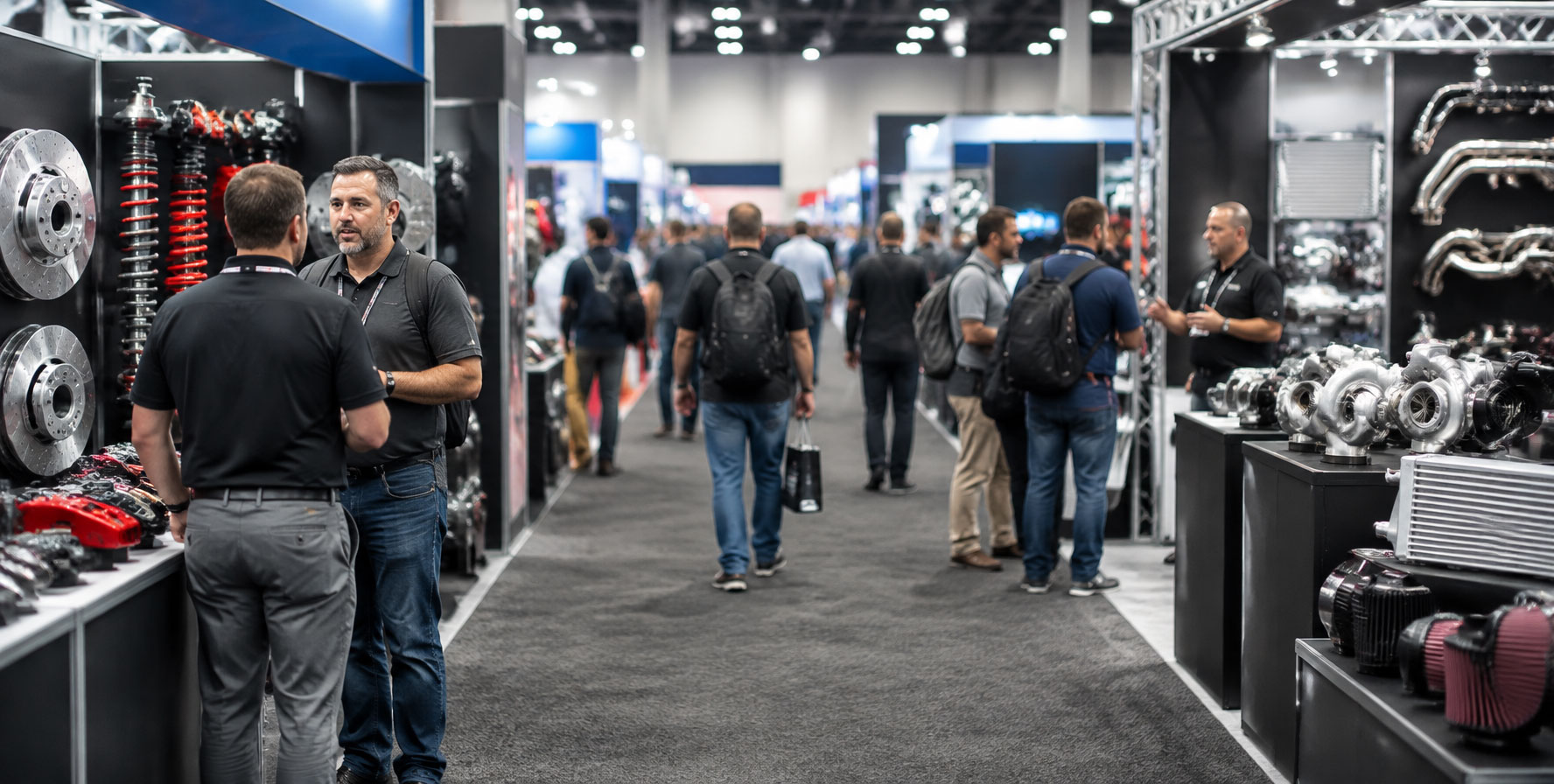
Online sales made up just under 19 percent of aftermarket sales in 2024, according to the Auto Care Association and MEMA report covered by aftermarketNews. AAPEX 2026 runs November 3 to 5 at the Venetian Expo and the AAPEX Forum in Las Vegas, and with more than 2,500 exhibitors across 550,000 square feet, ecommerce will come up in your conversations whether you’re working a booth or walking the floor.
AAPEX 2026
November 3 to 5, 2026Venetian Expo and the AAPEX Forum, Las Vegas2,500+ exhibitors across 550,000 sq ft
Tue, Nov 3
Show floor and sessions
Wed, Nov 4
Show floor and sessions
Thu, Nov 5
Show floor and sessions
Ecommerce happy hour, 6 to 9pm
Check the final program before you arrive to find the sessions on digital sales and AI.
Below are the topics we expect to come up most, along with what to listen for in each.
Why should ecommerce be on your AAPEX agenda?
The 2025 Joint E-commerce Trends and Outlook Forecast, released at last year’s AAPEX, projected direct ecommerce growth of 4.6 percent in 2025 and a compound annual rate of 5.4 percent from 2022 to 2030. When the forecast includes marketplaces such as Amazon and eBay Motors, the annualized rate for 2020 to 2030 rises to 6.7 percent.
~19%
of aftermarket sales were online in 2024
5.4%
projected annual growth for direct ecommerce, 2022 to 2030
6.7%
annual growth once marketplaces are included, 2020 to 2030
So marketplaces are growing faster than sellers’ own sites. For a parts seller, the same product data has to be accurate on your storefront and on channels you don’t run, and that should factor into any platform or data decision you make.
What’s different about AAPEX 2026?
AAPEX changed its layout for 2026 to make room for education across the show floor. You’ll find shorter free sessions on the floor, redesigned mini stages for debates and demos, and general sessions in the new AAPEX Forum. AI also has its own sections and sessions this year.
Ecommerce topics worth paying attention to this year
01
Marketplaces are outpacing direct sites
Sellers who keep their Amazon and eBay Motors compatibility listings accurate usually manage every channel from a single source file. A correction made in that file reaches the storefront and the marketplaces at the same time. Omnichannel product feeds are one way to get there.
Ask at the show
If you still update each channel separately, ask other sellers how they made the switch to a single source file and what it took.
02
Your buyers are searching on their phones
Hedges and Company data cited in the aftermarketNews report found mobile impressions and paid clicks running four times higher than desktop for aftermarket sites.
4x
more mobile impressions and paid clicks than desktop for aftermarket sites.Hedges and Company
A year/make/model lookup that feels quick in a desktop demo can drag on a phone, especially with a large fitment table behind it. Search also has to understand how parts buyers type, part numbers and misspellings included. Athos Commerce combines site search and merchandising in one discovery platform that adjusts results in real time to reduce searches that come back empty.
Ask at the show
When a vendor demos a search tool for you, ask to run it on your own phone.
Tools mentioned

03
Product pages are doing more of the selling
A buyer who isn’t sure a part fits will call your counter or shop somewhere else. Detailed fitment notes and accurate dimensions from your PIES data answer most of those questions on the page. For complex or configurable products, Dopple’s web-based 3D and AR platform lets shoppers examine a product from every angle before they buy.
Tools mentioned

04
Fitment data keeps getting bigger
A single brake rotor can carry hundreds of vehicle application rows, and the size of that table affects how quickly your search returns results.
1M+
fitment records can pile up across a 10,000 SKU catalog.
Under Auto Care Association standards, creating or receiving ACES fitment files requires a subscription to the Vehicle Configuration Database (VCdb), which also includes the Qualifier and Product Classification databases.
Watch the qualifiers
A note like “with 4WD” or a specific engine code often decides whether an order ships or comes back as a return.
Most ecommerce platforms handle year/make/model lookup through a third-party app or a custom build. If you’re considering a platform change, find out where your fitment data would live and how qualifiers would display on product pages. Good product catalog management makes both questions easier to answer.
05
Your ERP and your storefront have to agree
Many parts sellers in the $2M to $50M range run Acumatica or EBMS, and some still run QuickBooks. Each system handles inventory and order data differently. Integration problems often surface after launch, when inventory updates lag during a promotion or orders reach the warehouse without the vehicle the customer selected. We covered how that plays out in ERP and BigCommerce drift on pricing, stock, and fitment.
Patchworks connects your ERP to your storefront and marketplaces through prebuilt connectors, and it gives your team a single view of data moving between systems.
Ask at the show
Sellers who replatformed in the last year or two can tell you which parts of their integration needed the most attention after launch.
Tools mentioned

06
The rest of the stack shapes the buying experience
Selling to both retail customers and installers complicates sales tax. Avalara automates tax calculation and manages exemption certificates for wholesale accounts. BlueSnap processes B2B and international payments, and Signifyd reviews orders for fraud, which matters most on high-value parts that ship the same day.
After checkout, Route gives shoppers package protection and order tracking. Dotdigital handles the email automation behind order updates and abandoned cart reminders, which is where repeat parts buyers often come from. For a fuller picture, see our breakdown of the best ecommerce tech stack for automotive parts.
Checkout and after the sale





07
AI is entering the parts buying journey
AI has dedicated space at AAPEX this year, and much of the ecommerce discussion around it will focus on parts search and product recommendations. If you want background before the show, our post on Google’s AI shopping protocol covers what store readiness looks like.
What to listen for
Pay closest attention to examples running on a real parts catalog with real fitment data, since that’s where accuracy gets tested.
Questions that start good floor conversations
Some of the most practical ecommerce advice at AAPEX comes from other sellers. These questions are a good way to start those conversations:
“How are you keeping fitment current as new model years come out?”
“Do you build fitment yourselves or buy it from a provider, and who fixes it when it’s wrong?”
“What syncs between your ERP and your store in real time, and what runs on a schedule?”
“Which marketplace gives you the most trouble?”
Bring these numbers
Pull these before you go. With them on hand, it’s easier to compare your setup with what you hear.
Meet us in Vegas
Join us for the SEMA/AAPEX 2026 Ecommerce Happy Hour
Blayzer and BigCommerce are hosting. Come meet our team and trade notes with other parts sellers after the show floor closes.
Thanks to our happy hour sponsors

How Blayzer helps auto parts sellers
Blayzer has built ecommerce stores since 1998, and automotive parts is one of our core industries. From our office in St. Louis, we work with parts sellers nationwide on platform builds and fitment search, along with the ERP integrations that connect them to your back office. One team is responsible for how those pieces work together.
We recommend the platform and fitment approach that suits your catalog, including tools we don’t resell. We also handle tech stack integrations such as Acumatica and omnichannel feeds for Amazon and eBay Motors. See our work for Allgaier Performance and Proje Products.
Frequently asked questions
When and where is AAPEX 2026?
AAPEX 2026 runs November 3 to 5 in Las Vegas at the Venetian Expo and the AAPEX Forum. The Auto Care Association and MEMA Aftermarket Suppliers co-produce the show, which lists more than 2,500 exhibitors across 550,000 square feet.
What is ACES and PIES data?
ACES is the Auto Care Association’s standard for fitment data, the records that show which part fits which vehicle. PIES covers product details such as dimensions and descriptions. Both use XML files. Creating or receiving ACES files requires a subscription to the association’s Vehicle Configuration Database, known as the VCdb.
Do I need a separate fitment app for my ecommerce platform?
Usually, yes. Most platforms handle year/make/model lookup through a third-party app or a custom build instead of the core product catalog. The right option depends on the size of your catalog and how many vehicle applications your top SKUs carry.
How long does an auto parts ecommerce project take?
It depends mostly on the condition of your fitment data and how your ERP is set up. A clean ACES file and a well-documented ERP shorten the project, while fitment cleanup and complex integrations add time. A full replatform with fitment and ERP integration is usually measured in months, and we can give you a clearer estimate after reviewing your data.
Should I buy fitment data or build it in house?
If you sell more than a few thousand SKUs across many vehicles, buying fitment data usually makes more sense, since building it from scratch means researching every application against the VCdb. Building in house can work when your catalog is narrow, such as one vehicle platform, and someone on your team already knows the VCdb structure and qualifiers.
Talk to us about your parts store
AAPEX exhibitor offer
Save 10% on setup fees for projects started within 30 days of AAPEX
If you’re planning a replatform or cleaning up your fitment data, we can help you decide where to start. Mention the show when you book a call.