
Product Feed Management for Restricted Products: A Channel-by-Channel Guide
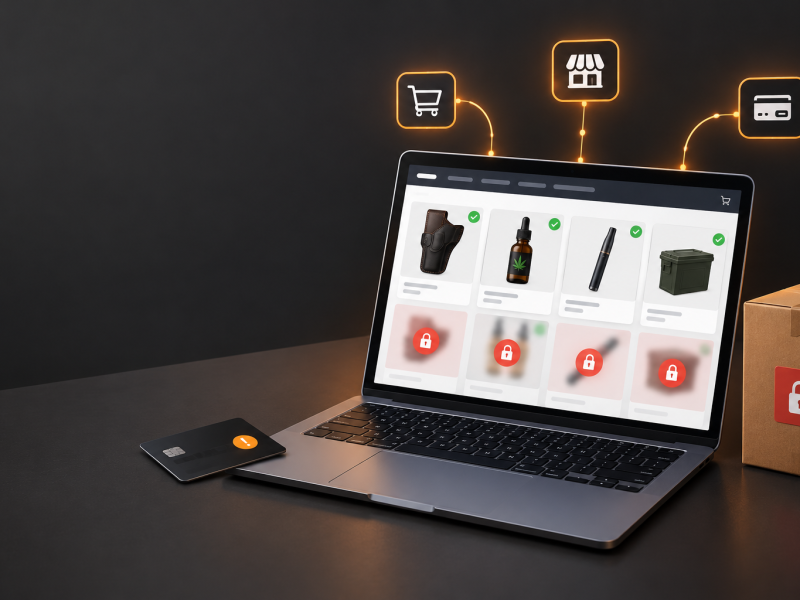
Selling restricted products doesn’t mean giving up on Google Shopping, Amazon, or social commerce. It means sending each channel the part of your catalog it accepts. A firearms accessory brand might keep holsters and weapon lights off Walmart Marketplace while listing its hunting accessories there, and a CBD brand might skip TikTok Shop entirely while building traffic to its own store.
The key is a product feed strategy built around each channel’s rules. This guide covers those rules channel by channel, along with the feed setup that puts them into practice. It’s the final piece in our series on selling restricted products, following our guides to advertising prohibited products and ecommerce platform restrictions.
Why Product Feeds Are Where Restricted Products Get Caught
Most multichannel ecommerce setups start by sending the full catalog everywhere. That works for a general retailer. For a regulated merchant, it means products that are legal and allowed on your own store land in channels that prohibit them, and those channels review listings automatically.
The consequences escalate quickly. Google’s dangerous products policy notes that it may not issue a warning before acting on egregious violations, and Walmart automatically unpublishes items that fall under its prohibited firearms policies. The goal of product feed management for restricted products is simple to state and takes discipline to execute: every channel should only ever see products it allows.
Channel-by-Channel Rules for Restricted Products
Each channel draws its lines differently, and the differences matter most for firearms accessories, where one channel allows a holster and another prohibits it.
Google Merchant Center (Shopping Ads)
Google’s dangerous products policy for Shopping ads and local inventory ads covers more than firearms. It also applies to ammunition, silencers, stocks, gun grips, scopes and sights, and even airsoft, paintball, and BB guns. The same policy covers tobacco products, products designed to simulate smoking, and products marketed for recreational drug use. Google’s broader Shopping ads policies list weapons, ammunition, explosives, and equipment that facilitates drug use as dangerous content.
Amazon
Amazon restricted products fall into two groups: categories that require approval and products that are prohibited outright. Amazon’s weapons policy prohibits all firearms and firearm ammunition, along with ammunition components. CBD is also off the table, and an Amazon representative has confirmed that CBD and cannabinoid products are prohibited under Amazon’s drugs and drug paraphernalia policy.
Amazon’s review is aggressive. Sellers have reported incense listings flagged as cannabinoid products, so ingredient lists and product copy need the same scrutiny as the product itself.
Walmart Marketplace
Walmart Marketplace is among the strictest channels for firearms-adjacent products. Its policies prohibit firearms and their component parts, firearm ammunition and most components, and firearm accessories not strictly used for hunting. That accessories policy covers magazines, holsters, targets, weapon lights, and pistol grips, so a catalog that clears Meta’s ad rules for holsters will still fail on Walmart.
eBay
eBay’s firearms, weapons, and knives policy states that actual firearms can’t be listed, and it prohibits live, blank, inert, and dummy ammunition. Some reloading equipment is allowed as long as listings avoid references to assault weapons and include no ammunition components.
TikTok Shop
TikTok Shop’s US Prohibited Products Policy, updated in May 2026, prohibits weapons, firearms, and ammunition, along with tobacco, e-cigarettes, vape liquids, and vape components. It also bans CBD beauty products. TikTok Shop’s separate content policy for shoppable videos and LIVEs treats cannabis, THC, and CBD-infused products as drugs, so the restrictions apply to creator content as well as listings.
Facebook and Instagram Shops
Meta’s commerce policies govern Facebook Shops, Instagram Shops, and Marketplace, and they prohibit weapons, ammunition, and explosives. Meta’s Community Standards also restrict content that attempts to sell CBD products. Advertising those same products follows a separate set of rules, covered in our guide to advertising prohibited products.
How to Build a Restriction-Aware Product Feed
Good product feed management for restricted products starts in your catalog, before anything leaves your store.
- Tag restricted products at the source. Add a product attribute or tag in your ecommerce platform that identifies each regulated SKU and its category, such as ammunition, holster, CBD topical, or vape. Every downstream feed rule depends on this data being accurate.
- Control publishing by channel. Most ecommerce platforms let you choose which sales channels each product publishes to. Use that control so restricted SKUs never enter feeds for channels that prohibit them.
- Use channel-level exclusion attributes. In Google Merchant Center, the excluded destination attribute keeps a product out of Shopping ads, free listings, Display ads, or local inventory ads individually. When excluded and included destination values conflict, the exclusion always wins.
- Build separate feeds per channel. A feed management tool or custom feed setup lets you apply different rules for Google, Amazon, Walmart, and social channels instead of forcing one catalog to fit all of them.
- Clean up titles, descriptions, and ingredients. Channels scan product data, and an accessory described as compatible with a restricted product can be flagged along with it.
- Re-audit when policies change. Walmart updated its firearms policies in December 2025, and TikTok Shop revised its prohibited products policy in May 2026. Schedule a feed review whenever a channel updates its rules or you add new products.
What to Do When a Listing Gets Disapproved
Disapprovals happen, even with a careful setup. In Google Merchant Center, start with the Needs attention view under Products, remove or fix the violating items, and resolve every open issue before requesting a review.
Resist the urge to relist with softer wording. Changing a product’s description or category to get it past review rarely works, and on channels like TikTok Shop, relisting a prohibited product can escalate enforcement. If a product is prohibited on a channel, the right fix is to exclude it from that feed.
Where Restricted Products Can Still Sell
Excluding restricted products from mainstream channels doesn’t leave you without options. Your own ecommerce store remains the most important sales channel for regulated products, and the right platform and payment setup make it a stable one. Our guide to ecommerce platform restrictions covers that in detail.
Specialized marketplaces fill some of the gap. For firearms, GunBroker connects buyers with licensed dealers and supports sales of firearms, ammunition, and accessories. For channels that allow some of your catalog, sending your compliant products keeps you visible while your restricted products sell on your own site.
Frequently Asked Questions
What is product feed management?
Product feed management is the process of preparing, optimizing, and controlling the product data you send to shopping channels and marketplaces like Google Shopping, Amazon, and Walmart. For restricted products, it also means controlling which products go to which channel, so prohibited items never reach channels that ban them.
What are Amazon's restricted products?
Amazon restricted products include categories that require approval, like animals, plants and seeds, tobacco, and weapons, along with products that are prohibited outright. Amazon prohibits all firearms, firearm ammunition, and ammunition components, and it prohibits CBD and cannabinoid products.
Can you sell CBD on Google Shopping?
Google’s Shopping ads policies treat recreational drugs, psychoactive substances, and equipment that facilitates drug use as dangerous content. Google Ads allows a narrow exception for topical, hemp-derived CBD from approved advertisers in a few states, so CBD merchants should confirm current eligibility before adding CBD products to a Shopping feed.
Can you sell holsters on Walmart Marketplace?
No. Walmart Marketplace prohibits firearm accessories that aren’t strictly used for hunting, and its policy specifically includes holsters, magazines, targets, and weapon lights.
Can you sell CBD on TikTok Shop?
TikTok Shop’s US Prohibited Products Policy bans CBD beauty products, and its content policy treats cannabis, THC, and CBD-infused products as drugs. CBD merchants should exclude these products from TikTok Shop feeds.
Get Help With Your Product Feeds
Blayzer Digital has helped businesses build and grow online since 1998. If you sell restricted products across multiple channels, we can help you tag your catalog, set up channel-specific product feeds, resolve disapprovals, and keep your listings compliant as channel policies change. Learn more about how we work with regulated industries.