
How Blayzer Uses AI to Deliver Better Results for You
AI didn’t change how Blayzer thinks about good work. It changed how fast the team can do it, and how much more of the right work can get done on your behalf. Since 1998, the approach has stayed consistent: strategy first, results second, and no shortcuts that compromise quality. What has shifted is the toolkit. Across SEO, content, web development, ecommerce, and internal operations, AI is now woven into how the Blayzer team works every day. This post pulls back the curtain on exactly how agencies use AI for client results, which tools are in play, what each one actually does, and what it means for your business.
How AI Powers Your Client Deliverables — SEO, Content, and Campaigns
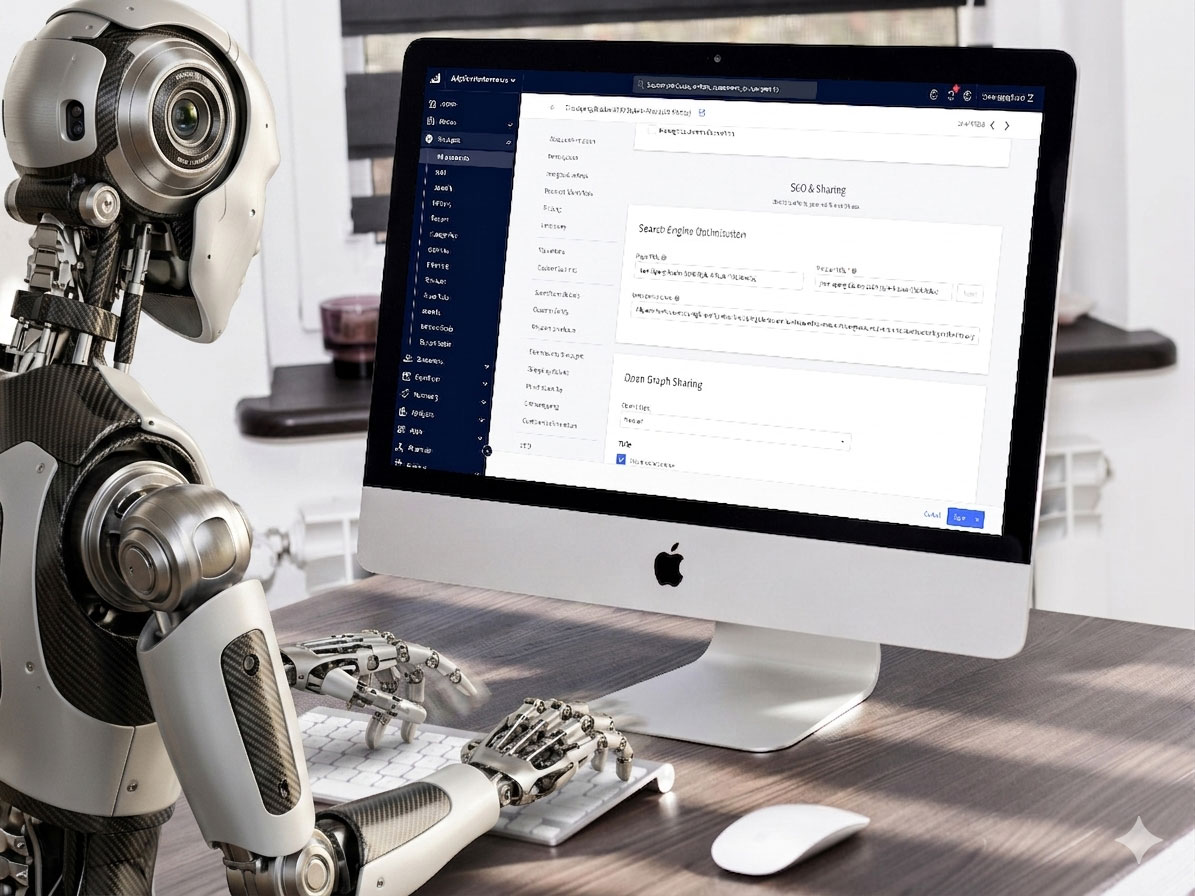
The most visible place AI shows up for you is in the work product itself. That means your SEO strategy, your content calendar, your ad copy, and your campaign structure. The tools doing the heavy lifting in our AI stack are Claude, ChatGPT, and Gemini, and each has a specific role.
Content and Strategy Engine
AI now handles most of our writing-intensive work. That includes first drafts of blog posts, on-page SEO copy, email sequences, and campaign briefs. AI isn’t writing final copy and calling it done. The Blayzer team uses it to move from a blank page to a structured, on-strategy draft faster, then applies editorial judgment, brand voice alignment, and client-specific context before anything goes out the door.
For SEO work specifically, Claude supports keyword clustering, meta description generation, content gap analysis, and internal linking strategy. Tasks that used to take hours of manual work can now be completed in a fraction of the time, which means the team spends more time on the decisions that actually require expertise.
Research and Ideation
AI is used primarily for research-stage tasks, including competitive content analysis, topic exploration, and generating multiple angles on a given subject before the team commits to a direction. It’s particularly useful for brainstorming campaign concepts and mapping out content frameworks early in a project.
Google-Native Insights
Because Gemini is built within Google’s ecosystem, it’s an AI tool our team often reaches for when work is directly tied to Google’s platforms. That includes analyzing search trend data, pulling insights from Google Analytics integrations, and supporting reporting work that connects directly to search behavior. For ecommerce clients running Google Shopping or Performance Max campaigns, Gemini’s alignment with Google’s data layer adds measurable value to the strategy process.
A Real Example: Fitness Equipment Ecommerce AI Optimization
One client in the fitness equipment ecommerce space faced a problem that’s becoming increasingly common: zero-click search was rising, AI tools like ChatGPT, Claude, and Gemini were surfacing answers during the research phase, and while their search visibility was up, clicks and traffic were down. Like many other websites at the time, they were losing traffic to AI.
So Blayzer built a strategy that addressed the root cause. We researched what LLMs actually considered authoritative, which sources they pulled from, and how they presented product information. From there, the work included implementing an LLMS.txt guide file to direct AI systems to the right information, building out FAQ content and buyer guides to support commercial research queries, and restructuring product data for clarity and machine readability.

We set a simple, straightforward goal: show up in high-intent LLM searches to capture active buying demand and drive qualified traffic and revenue.
The results over the following 12-month comparison period included significant growth in sessions, users (almost entirely new), and shopping activity across the full ecommerce funnel from catalog to cart to checkout. Sales revenue from AI-driven traffic grew from under $2,000 to over $60,000. Conversion rate saw a 250% increase. Non-ecommerce lead actions, including contact form submissions and email and SMS signups, also lifted meaningfully.
This is the kind of work that requires both AI fluency and strategic thinking. The tools made it faster. Our strategy made it work.
How AI Runs Behind the Scenes — Internal Ops and Project Efficiency
The operational side of an agency is where inefficiency quietly costs clients time and money. Slow internal communication, inconsistent briefing processes, and manual status tracking all add up. AI has changed how the Blayzer team manages those layers.
Internal Documentation and Communication
We use AI when drafting internal documents, including project briefs, scope summaries, meeting recaps, and process documentation. A well-structured brief that might have taken 45 minutes to write from scratch can be drafted, reviewed, and finalized in a fraction of that time. That speed translates directly into faster project kickoffs and cleaner handoffs between team members.
Presentations and Visual Communication
We also use AI in the creative presentation layer, including strategy decks, client-facing proposals, and event presentations. Rather than building slides from scratch, the team uses AI to generate structured layouts that can be refined quickly. The result is polished, professional deliverables that get to clients faster without sacrificing quality.
Smarter Project Efficiency Across the Board
Across operations, the effect of AI is cumulative. When briefing, drafting, documenting, and presenting all move faster, the team has more capacity for the work that requires human judgment, which is reading a client’s business situation accurately, making the right strategic call, and building the kind of long-term relationship that’s defined Blayzer’s approach since the beginning.
How AI Improves Web Development and QA — From Prototyping to Launch
AI in web development isn’t about replacing skilled developers. It’s about removing the friction that slows them down and improving the accuracy of the work that ships to you.
AI in the Development Workflow
For development tasks, AI supports code review, documentation generation, and the kind of repetitive scripting work that consumes developer time without requiring deep problem-solving. When a developer needs to document a custom function, generate boilerplate code, or work through a logic issue, AI accelerates that process. The developer still owns the decision-making. The AI handles the time-consuming groundwork.
On platforms like BigCommerce, Shopify, Shopware, Adobe Commerce/Magento, WooCommerce, and WordPress, where customization layers and third-party integrations can get complex quickly, having a tool that can help the team move through documentation and code structure faster directly benefits your project timeline.
AI-Assisted QA and Performance Testing
Quality assurance is one of the most time-intensive parts of any web project, and it’s also one of the areas where AI is making a measurable difference. AI tools help the team identify inconsistencies, flag accessibility issues, and structure testing checklists more efficiently than manual review alone.
Prototyping and Design Iteration
Early-stage prototyping benefits from AI in a different way. Rather than going through multiple rounds of conceptual revisions before a client sees anything, the team can explore more directions faster, pressure-test layout decisions, and arrive at a more refined starting point. You see better work sooner, and the feedback loop tightens.
What This Means for Your Business — and How Nia Can Help You Start
Every tool described above is in service of a straightforward goal: delivering better results for you, faster and more accurately than was possible before. Blayzer isn’t using AI as a shortcut or a cost-cutting measure. We’re using it to expand what a full-service, boutique agency can do for a client at any given time.
That means your SEO strategy is sharper. Your content moves faster. Your development projects have fewer delays. Your campaigns are grounded in better research. And your team at Blayzer has more capacity to think strategically on your behalf rather than grinding through tasks that machines can handle.
Meet Nia — Blayzer's Proprietary AI Tool
Most site audit tools give you data and leave you to figure out what to do with it. Nia works differently.
Nia is Blayzer’s proprietary website analysis tool — built in-house and powered by the same strategic thinking the team applies to every client engagement. The idea behind it is straightforward: AI can surface site performance and SEO data faster and more comprehensively than manual review, but data without context isn’t useful. So Nia is built to deliver both.
Here's what a free Nia site analysis includes:
Internally, the Blayzer team uses Nia as part of the site assessment process — which means when you come to Blayzer for an audit, you’re getting AI-powered analysis informed by real agency experience, not a generic scorecard. The tagline says it plainly: this isn’t Artificial Intelligence. It’s Agency Intelligence.
A free Nia site analysis is the fastest way to get an honest picture of where your site stands and where the real opportunities are.
Your site is either working for your business or it isn’t. AI-powered insight won’t replace a good strategy, but it will show you exactly where to start. If you’re ready to see what’s actually going on under the hood, start with a free site assessment from the Blayzer team. Make an appointment today and get a clear, honest look at your site’s performance, SEO health, and where the real opportunities are.