



Client: DA Targets
Industry: Shooting Sports & Training Equipment
Products: Self-Healing & Color-Changing Shooting Targets
Agency: Blayzer Digital
Platform: Shopify SEO, Google Ads, Meta Ads, GA4
Performance Highlights
Here’s what DA Targets achieved over six months of ecommerce marketing with Blayzer Digital:
DA Targets:
Engineering a Better Shooting Experience
DA Targets designs and manufactures advanced self-healing, color-changing shooting targets engineered for maximum safety, durability, and immediate feedback at the range. Their patented products are used by recreational shooters, professional trainers, and range operators who demand consistent performance. Their targets address practical range issues such as ricochet risk, target degradation, and lack of visual feedback, helping the brand earn trust in a competitive and regulated market.
As market demand intensified, DA Targets saw an opportunity to establish ecommerce as a primary revenue channel. They invested in building a Shopify ecommerce store to support this shift, which then required a strategic marketing approach to turn the storefront into a consistent sales channel. The mission was clear: boost visibility, broaden reach, and convert that increased attention into consistent, repeatable sales.
This presented a high-intent buying cycle with more than one path to purchase. Some customers convert quickly, while others engage in extensive research before deciding days or weeks later. The product easily generates interest, but interest alone cannot sustain a scalable ecommerce business.
We connected with the DA Targets team at an NRA event and began collaborating on a plan to build a reliable digital growth engine tailored specifically to their products.

The Challenge
When we started working together, DA Targets already had marketing momentum: a solid product, web traffic, sales, and growing brand recognition. What they didn’t yet have was a cohesive online growth engine.
Several things were holding the business back from scaling confidently:
Our real goal was deeper than “more ads” or “more traffic.” We needed to build a system that consistently turns demand into revenue and support long-term growth.
The Strategy: Building ROI in Stages
We approached this as a business systems problem first, and a marketing execution problem second.
That meant focusing on:
Rather than pushing immediately for scale, our work followed a staged approach that matched how digital marketing ROI develops over time. Each phase built momentum for the next.
Phase One: Establishing the Foundation
We started by establishing visibility, structure, and control.
We refined tracking so Shopify revenue, paid media performance, and on-site behavior aligned across platforms. This gave the team a reliable baseline to evaluate performance and understand how buyers moved from first visit to purchase over time.
At the same time, we cleaned up and structured product data and feeds to support consistent performance across Google and Meta. We prepared product information, naming conventions, and attributes to work with automated delivery while maintaining control as platforms leaned more heavily on AI-driven optimization.
We rebuilt Meta Ads infrastructure early. Campaign structures, audiences, and account setup supported creative testing, retargeting, and future scale rather than short-term wins.
Behavioral signals improved early. Product views increased. Add-to-cart activity rose. Checkout starts became more consistent. These signals confirmed the system could support increased demand.
Phase Two: Improving Efficiency
Once the data proved reliable, we shifted our attention to efficiency and conversion.
We rebuilt Google Ads campaigns around high-intent searches tied directly to DA Targets products and use cases. In Meta Ads, we moved beyond basic prospecting and built structured audience development, including retargeting pools, engagement audiences, and creative testing designed to feed future campaigns.
We developed ad content and variations to test messaging, product benefits, and visual approaches without fragmenting performance. This process surfaced winning themes ahead of key sales periods.
We reduced friction between product pages, cart, and checkout so existing demand converted more consistently. SEO and supporting content addressed common research patterns for buyers who required multiple visits before purchasing.
During this phase, conversion rates improved while cost per click remained low across ecommerce paid media. Paid search became a dependable revenue channel, and paid social built audiences ready for activation during seasonal pushes.
Phase Three: Scaling with Predictability
With efficiency established, DA Targets scaled with confidence.
The team increased spend alongside revenue, particularly during high-intent windows such as BFCM and holiday campaigns. Because feeds, campaigns, and audiences were already structured, scale did not introduce instability.
Organic traffic contributed purchases alongside paid channels. Paid social audiences reached sufficient size to support sustained retargeting and repeat exposure. Those rebuilt audiences were activated at higher spend without degrading performance, and results held as volume increased.
As SHOT Show approached, the ecommerce system supported both consumer demand and rising interest from professional and institutional buyers. Traffic quality improved, sales patterns stabilized, and forecasting became more reliable.
How Performance Evolved
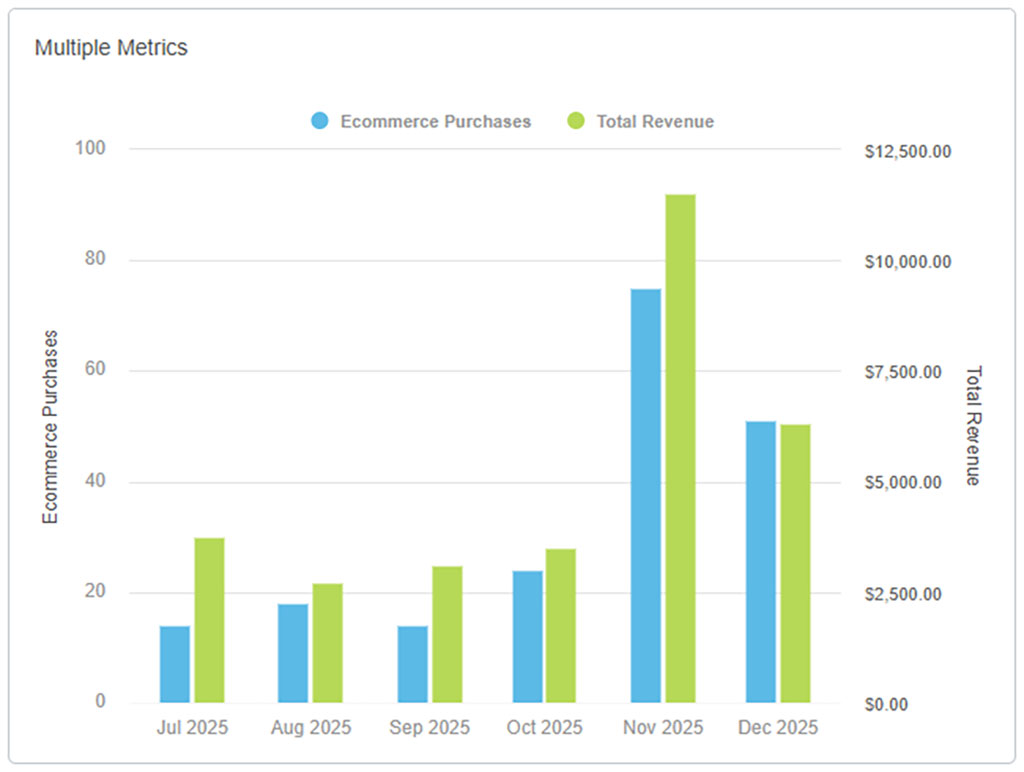
DA Targets’ growth followed a healthy, sustainable pattern.
DA Targets’ growth followed a healthy, sustainable pattern.
The foundation took hold and conversion efficiency improved. Paid search became more reliable as a revenue driver. Organic traffic began contributing not just visits, but real sales.
As we approached the 6-month milestone, DA Targets reached their strongest overall performance period to date. Revenue, traffic quality, and funnel depth were all meaningfully higher than when we started, and most importantly, more predictable.
The Business Impact
Following this progression changed how ecommerce performed across the business.
DA Targets experienced:
Even during seasonal downshifts, the underlying system continued to perform. More people entered the funnel. More people moved through it. More people came back.
This is what durable ROI looks like in ecommerce.
What Comes Next
With a stable direct-to-consumer foundation in place, DA Targets is now entering a new phase of growth. Next up: launching a new B2B-focused product line at the SHOT Show and broadening direct-to-consumer industry distribution.
Our future efforts will focus on:
Expanding
into B2B and institutional buyers
Supporting longer sales cycles
with better content and funnel structure
Using their growing data and D2C audience
base to accelerate adoption
Applying Blayzer’s B2B ecommerce experience
to pricing, segmentation, and lead-to-order strategy

Ready to Build Your Own Growth Engine?
DA Targets did not achieve results by rushing to scale. Their growth followed a clear sequence that prioritized foundation, efficiency, and predictability. This same approach guides how Blayzer Digital drives ecommerce growth across both D2C and B2B.
If you are building or rebuilding your ecommerce channel, understanding when and how ROI develops matters.
Let’s build your growth engine together. Contact Blayzer Digital to turn your marketing into a predictable revenue system.